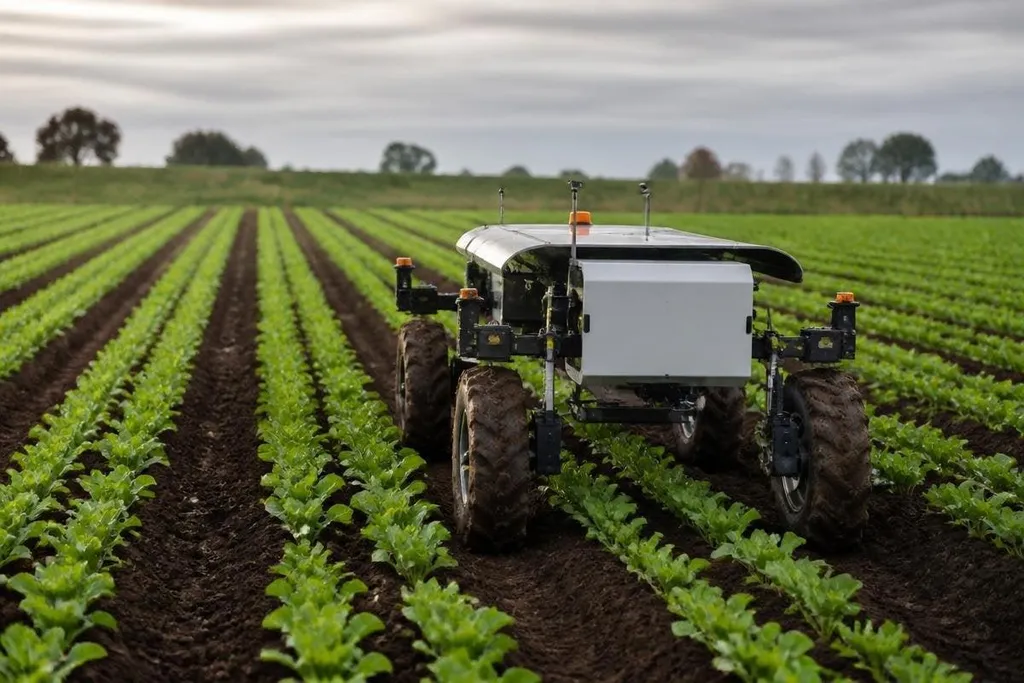
Farm robots have to work around mud, dust, rain, uneven ground, and plants that rarely grow in neat shapes. That makes agricultural automation a field problem first and a robot problem second.
- Field robots can inspect rows, remove weeds, or carry tools close to plants.
- Machine vision helps a robot separate crops from soil, leaves, and unwanted plants.
- Farm fit depends on setup time, repairs, crop type, and the work done each day.
Where agricultural robots can help
Many farm tasks repeat along the same path. A robot can move between crop rows, scan leaves with cameras, or carry a small tool beside each plant. The value comes from steady work in a narrow task, not from giving one machine every job on the farm.
A field robot may use LiDAR to measure nearby objects and machine vision to identify plants. Some systems also use real-time kinematic global navigation satellite system positioning, known as RTK-GNSS, to hold a more exact path across a field. That path still needs checking when rain changes the soil or crop growth blocks the route.
Weeding shows why this matters. A robot must find the crop, locate nearby weeds, and move a blade or other tool without cutting the plant. A few centimeters can decide whether the tool removes the weed or damages the crop.
Harvesting asks more from the machine. Fruit can hide behind leaves, ripen at different times, and bruise under too much force. A gripper, the robot’s hand or tool, needs enough control to hold the fruit without pulling a branch or leaving marks that reduce its sale price.
The farm sets the limits
Agricultural robots work in places built for tractors and people, not for small autonomous systems. Fields can lack charging points, firm paths, shelter, and fast repair help.
A robot that stops at the far end of a field may need a person to drive out and recover it. Weather adds another problem: cameras see less clearly in rain, mud can cover wheels and sensors, and heat can reduce battery life.
Dust can reach moving parts and electrical connectors. The robot needs a cleaning plan and parts that farm staff can replace without sending the machine back to the maker.
A farm robot’s repair record says more about daily work than a sensor list alone. Reports at Robot24.com can connect the machine’s farm task with its maker, test date, and repair needs before the business case asks what the robot saves.
The business case needs a clear task
Operators should start with one job that is costly, hard to staff, or repeated often enough to measure. The robot’s work can then be compared with the current method by time, crop damage, labor hours, fuel, and repair cost.
A machine that handles one row task for many hours may be more useful than a larger system that claims to cover the whole farm. The work also has to fit the crop calendar. A robot for young plants may sit idle once the crop grows taller, while a harvest system may have only a short period each year to earn its keep.
The maker’s plan for failures deserves close attention. Ask who clears a blocked tool, replaces a wheel, updates the software, and checks the robot after a collision. A farm cannot treat every stoppage as a remote support ticket.
A buying check for farm robots
Use this list before a field trial or purchase:
- Name one task: Set the crop, row spacing, tool, and work hours in writing.
- Measure the baseline: Record labor time, fuel use, crop loss, and current repair costs.
- Check the ground: Test slopes, mud, stones, turning space, and access between rows.
- Plan recovery: Decide who retrieves the robot, where it charges, and how it gets cleaned.
- Inspect the tool: Confirm that the end effector can be changed when the crop or task changes.
- Set a pass mark: Choose the result that makes the system worth keeping before the trial starts.
The next useful agricultural robot will earn trust through one repeatable job: finding the right plant, using the right tool, and finishing the row without constant rescue. Farms will buy that result when the numbers still work after weather, repairs, and the quiet days between harvests.